
Understanding the Financial Landscape

Finance
equity
taxes
finance

A city’s financial health depends on its ability to generate revenue while efficiently managing costs. San Antonio’s economic future is tied to its tax structure, infrastructure spending, and land use policies. Understanding these financial mechanisms is key to making data-driven decisions that support long-term sustainability.

Intro

Dolor fugiat laborum quis incididunt laborum occaecat occaecat id velit id aliqua culpa. Exercitation ut anim commodo voluptate qui duis proident dolore nostrud nostrud cillum. Irure commodo qui excepteur reprehenderit adipisicing et eu voluptate nisi aliqua qui anim id anim exercitation. Dolore veniam nulla tempor enim velit consequat adipisicing consectetur sint duis nisi consectetur mollit irure. Qui sint amet cupidatat commodo pariatur sint duis exercitation ullamco. Aute ad duis deserunt tempor. Incididunt consequat nostrud aliquip tempor nisi proident ullamco laboris sunt ex elit occaecat reprehenderit adipisicing.
Dolor fugiat laborum quis incididunt laborum occaecat occaecat id velit id aliqua culpa. Exercitation ut anim commodo voluptate qui duis proident dolore nostrud nostrud cillum. Irure commodo qui excepteur reprehenderit adipisicing et eu voluptate nisi aliqua qui anim id anim exercitation. Dolore veniam nulla tempor enim velit consequat adipisicing consectetur sint duis nisi consectetur mollit irure. Qui sint amet cupidatat commodo pariatur sint duis exercitation ullamco. Aute ad duis deserunt tempor. Incididunt consequat nostrud aliquip tempor nisi proident ullamco laboris sunt ex elit occaecat reprehenderit adipisicing.

Last

Dolor fugiat laborum quis incididunt laborum occaecat occaecat id velit id aliqua culpa. Exercitation ut anim commodo voluptate qui duis proident dolore nostrud nostrud cillum. Irure commodo qui excepteur reprehenderit adipisicing et eu voluptate nisi aliqua qui anim id anim exercitation. Dolore veniam nulla tempor enim velit consequat adipisicing consectetur sint duis nisi consectetur mollit irure. Qui sint amet cupidatat commodo pariatur sint duis exercitation ullamco. Aute ad duis deserunt tempor. Incididunt consequat nostrud aliquip tempor nisi proident ullamco laboris sunt ex elit occaecat reprehenderit adipisicing.

Revenue Sources: Where the Money Comes From

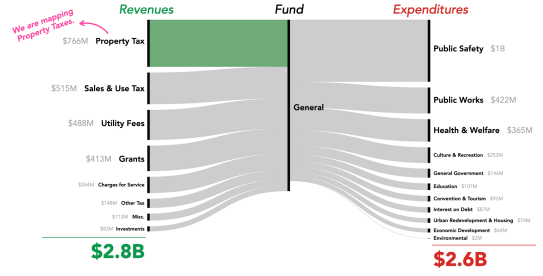
  • Property Taxes Drive Revenue: Property taxes are the largest funding source for San Antonio’s budget, accounting for over a quarter of the city’s revenue. These taxes fund schools, emergency services, public safety, and other essential services. Accurate property assessments ensure fairness and financial stability.
  • Sales Tax & Utility Fees: Sales tax provides additional revenue, while utility fees fund essential services like water, electricity, and sanitation. A well-balanced mix of these sources ensures long-term financial health and prevents over-reliance on a single revenue stream.
  • State & Federal Support: Additional funding from state and federal grants supplements the city’s budget, but these sources can be unpredictable and subject to policy changes.

The Role of Geoaccounting in Fiscal Planning

  • Geoaccounting for Smarter Decisions: Mapping revenue and expenses reveals which areas contribute the most to the city’s budget. This data-driven approach helps policymakers allocate resources efficiently and prioritize development that generates high returns.
  • Identifying Revenue Hotspots: High-density areas, mixed-use developments, and commercial hubs tend to generate more revenue per acre than sprawling suburban developments.
Album

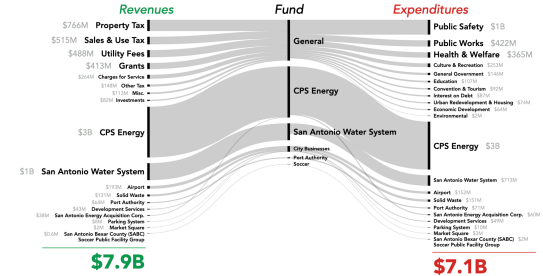
Comparing Revenue & Costs: By analyzing where tax revenue is generated versus where city funds are spent, decision-makers can identify inefficiencies and adjust spending to maximize financial returns.

The Cost Side: How the Budget is Spent

  • Infrastructure & Public Services: A significant portion of San Antonio’s budget goes toward maintaining roads, public transportation, water systems, and emergency services. Without proper planning, infrastructure costs can outpace revenue growth.
  • Hidden Costs of Expansion: New developments often require additional roads, utilities, and services, creating long-term financial obligations. Without strategic growth planning, these costs can place a burden on future budgets.
  • Budget Shortfalls & Long-Term Liabilities: Underfunding infrastructure maintenance leads to deterioration and higher costs down the line. Ensuring that revenue-generating policies align with infrastructure spending is crucial for long-term sustainability.

Why This Matters for Elected Officials

  • Balancing Revenue & Expenses: Ensuring a sustainable financial future means making informed choices about taxation, spending, and land use.
  • Strategic Growth for Economic Stability: Smart planning can help cities maximize revenue while keeping long-term costs manageable.
  • Fair & Equitable Tax Policies: Ensuring all properties are assessed accurately prevents undue burdens on specific communities and promotes economic fairness.

By leveraging financial data, revenue mapping, and strategic planning, San Antonio can ensure a stable, equitable, and financially sound future for all residents.

We live in cities driven by the fate of these policies rather than cities created by choices of design.

- Joe Minicozzi

Value Per Acre – The True Measure of Productivity

Not all land is created equal when it comes to tax revenue generation. The way land is developed and utilized directly impacts San Antonio’s fiscal health. A deeper understanding of property productivity can help guide policy decisions that maximize value while minimizing costs.

Why Value Per Acre Matters

  • A Smarter Metric for Land Use: Total property value is not always the best measure of economic impact. Instead, evaluating revenue per acre allows for a fair comparison between different land uses.
  • Urban Density vs. Sprawl: High-density urban developments generate significantly more tax revenue per acre than suburban developments with large parking lots and low-density buildings.
  • Maximizing Efficiency: Well-planned developments make better use of public infrastructure, reducing the need for costly expansions while increasing tax contributions.

The Impact of Land Use on City Finances

  • Downtown San Antonio is 10x More Productive: The city center, with its mix of commercial, residential, and cultural spaces, produces significantly more revenue per acre than sprawling suburban developments.
  • The Hidden Cost of Parking Lots: Large parking lots take up valuable land without contributing significant tax revenue. Encouraging more efficient land use can increase financial productivity.
  • Mixed-Use Development Boosts Revenue: Properties that combine residential, commercial, and office spaces generate more value per acre, making them a financially sustainable investment for the city.

Policy Implications for Smart Growth

  • Prioritizing High-Return Areas: Investing in infrastructure and incentives for dense, mixed-use developments ensures that tax revenues keep pace with city expenses.
  • Rethinking Zoning Laws: Updating zoning regulations to allow for more compact, multi-use developments can increase overall land productivity.
  • Encouraging Infill Development: Developing underutilized parcels within existing urban areas reduces the need for costly infrastructure expansion while maximizing land value.

By focusing on value per acre as a core metric, San Antonio can make land use decisions that strengthen its tax base, reduce infrastructure costs, and create a more vibrant and sustainable city.
The Equity Angle

A fair tax system is one where everyone pays their share — no more, no less. But in San Antonio, that’s not the reality for many families. Urban3’s assessment equity analysis reveals a troubling pattern: the lowest-value homes are often over assessed, while higher-value homes tend to be under assessed.